
 See My Latest Article on HelloNation
Painting the outside of a home can look straightforward from the ground, but the decision between doing it yourself and hiring a professional depends on much more than the cost of paint. The home’s size, exterior material, height, condition, weather exposure, available time, and safety risks all affect which approach makes sense.
For many households, DIY painting is practical when the work is limited, the surfaces are sound, and the project can be completed safely. Professional help becomes more valuable when preparation is extensive, access is difficult, or a poor result could lead to water damage and repeated repairs.
Is exterior painting a realistic DIY project?
Yes, exterior painting can be a do-it-yourself project for a homeowner who has adequate time, basic equipment, and a manageable scope of work. A small, one-story home or limited repainting project is generally easier to control than a large house with multiple levels and deteriorated siding.
DIY work is most suitable when:
- The exterior is in generally good condition.
- Most surfaces can be reached safely from the ground or stable low-height equipment.
- The project can be spread over several weekends.
- The homeowner is comfortable with scraping, sanding, caulking, priming, and careful cleanup.
- There is a dry-weather window long enough for preparation and coating to cure properly.
The painting itself is only one part of the job. Washing, removing loose paint, repairing damaged areas, protecting windows and landscaping, and applying the correct number of coats often take more time than expected.
What makes exterior painting harder than interior painting?
Exterior surfaces face rain, snow, sunlight, temperature changes, wind, and biological growth. A coating that looks acceptable indoors may fail outdoors if the surface is damp, dirty, chalky, or poorly prepared.
Exterior painting commonly involves:
- Removing peeling or blistered paint.
- Scraping and sanding rough edges.
- Replacing or repairing damaged wood.
- Sealing gaps around trim, windows, and doors.
- Controlling overspray, drips, and airborne debris.
- Working around gutters, utility connections, landscaping, and uneven ground.
- Waiting for suitable temperature and humidity conditions.
Older homes in Easton, PA may also have several layers of previous paint. If a home was built many decades ago, peeling or disturbed coatings should be handled cautiously because older paint may contain lead. Sanding, scraping, or using heat on questionable layers can create hazardous dust or fumes. Lead-related work may require specific containment and safe-work practices rather than ordinary household preparation.
When is DIY painting the better choice?
DIY painting can be the better option when the homeowner values control over timing and is willing to handle detailed preparation. It may also make sense when the project involves a porch ceiling, shutters, a small section of siding, or accessible trim rather than the entire exterior.
The financial benefit is usually greatest when labor would represent most of the project cost. However, savings are reduced if the homeowner must purchase or rent ladders, pressure-washing equipment, dust-control supplies, drop cloths, sanding tools, and repair materials.
A careful DIY approach should include:
1. Inspecting the exterior for rot, cracks, failed caulk, loose siding, and moisture problems.
2. Washing the surface and allowing it to dry fully.
3. Removing only paint that is loose or failing rather than aggressively stripping sound coatings.
4. Priming repaired, bare, stained, or questionable areas with a compatible primer.
5. Testing the chosen coating on a small, inconspicuous area.
6. Planning the work so that each surface receives consistent coverage and proper drying time.
7. Cleaning tools and removing protective materials before wind or rain creates a problem.
A common misconception is that two coats will hide every preparation mistake. Paint can improve appearance, but it cannot permanently correct rotted wood, active leaks, loose masonry, or persistent moisture.
When is professional work more practical?
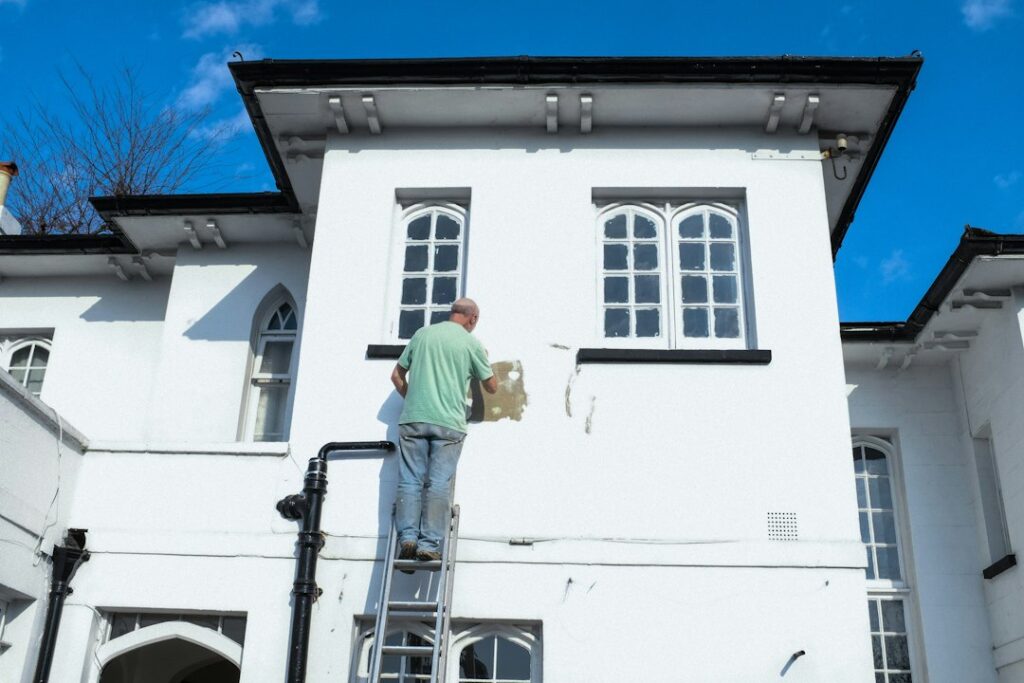
Professional painting is more practical when the project involves significant height, extensive repairs, difficult access, or a tight completion schedule. Safety is the clearest reason to avoid doing certain work alone.
Professional assistance is especially reasonable when:
- Two-story or taller areas require extended ladder use.
- Roof edges, steep grades, or fragile surfaces make footing uncertain.
- Exterior wood has widespread rot or structural deterioration.
- Paint is peeling across large areas.
- The home contains older coatings that may involve lead hazards.
- The exterior includes multiple materials requiring different preparation methods.
- The project must be completed within a narrow seasonal window.
- The homeowner cannot manage lifting, repetitive overhead work, or prolonged exposure to dust and cleaning solutions.
This does not mean every large project requires outside labor. It means the risks and technical demands should be assessed honestly. A homeowner may choose to complete accessible trim independently while leaving high areas, extensive repairs, or hazardous preparation to someone with the necessary equipment and training.
How does local weather affect the decision?
Seasonal conditions in Easton can make exterior painting more complicated than the calendar suggests. Spring may bring damp surfaces and changing temperatures. Summer can provide longer workdays but may produce heat, strong sunlight, and rapid drying. Fall often offers comfortable painting conditions, although shorter daylight and overnight moisture become factors.

Paint should not be applied to a wet surface or during conditions outside the coating manufacturer’s temperature and humidity range. A wall that feels dry in the afternoon may collect condensation overnight, especially when temperatures drop.
Weather-related planning should account for:
- Several consecutive dry periods rather than only one sunny day.
- Morning dew and overnight condensation.
- Direct sunlight that causes uneven drying.
- Wind that carries dust, leaves, and paint droplets.
- Rain arriving before the coating has cured.
- Lower temperatures late in the season.
A rushed project can produce lap marks, poor adhesion, wrinkling, early peeling, or visible differences in sheen. Waiting for suitable conditions is often more valuable than working longer hours.
Which exterior materials require the most care?
The surface material affects both preparation and product selection. Wood siding and trim may need scraping, sanding, spot priming, and repair of soft areas. Fiber-cement siding generally requires attention to manufacturer guidance and careful treatment of cut edges. Masonry may need cleaning, crack repair, and coatings designed for porous surfaces.
Vinyl and other manufactured siding can sometimes be painted, but dark colors may increase heat absorption and contribute to distortion depending on the product and exposure. Metal surfaces may have rust, oxidation, or failing factory finishes that require specialized preparation.
Common mistakes include:
- Painting over chalky residue without proper cleaning.
- Sealing in moisture behind caulk or paint.
- Using interior paint outdoors.
- Applying a coating incompatible with the existing surface.
- Ignoring bare edges, end grain, or exposed fasteners.
- Painting windows shut or blocking drainage paths.
Reading the coating label and surface-specific instructions is not a minor step. Compatibility problems can cause peeling even when the paint was applied neatly.
What is the true cost difference?
DIY painting usually lowers direct labor costs but increases the value of the homeowner’s time. A project that appears inexpensive can become costly after adding equipment, repairs, primer, protective materials, disposal, and replacement tools.
Professional work generally costs more upfront but may reduce the chance of repeated preparation, unsafe ladder use, coating failure, or damage to landscaping and adjacent surfaces. The comparison should consider the full project rather than the price of paint alone.
A useful question is not simply, “Can this be painted?” It is, “Can the surface be prepared, coated, and cleaned safely with the time and equipment available?”
How should a homeowner decide?
DIY is usually a reasonable choice for accessible, limited-scope work on sound surfaces. Professional assistance becomes the safer and more practical option when height, hazardous coatings, structural repairs, difficult materials, or severe deterioration are involved.
For a mixed project, dividing the work can be sensible. A homeowner might handle color planning and accessible preparation while reserving high elevations, extensive scraping, or damaged wood repairs for qualified help. The most durable result will come from accurate inspection, compatible materials, safe access, and patience during preparation—not from choosing DIY or professional work automatically.